Washington, D.C. – May 27th, 1983 – 9:20 PMAt about the same time Jon was finding himself too distracted by thoughts of Megan Kincaid to continue to play Pitfall, Deputy Director Gordon Swan was sitting down in conference room three with Howard Voss and Theresa McNaney.
They were already in the room, standing and waiting by the door, when he arrived. Howard Voss stepped forward immediately and thrust his hand out to Gordon. “Howard Voss, Deputy Director with the NSA. This is Theresa McNaney, a Special Operations Coordinator at the Department of Defense.”
So, it wasn’t just the NSA, but the entire Department of Defense. Gordon could just see the paperwork. Miles and miles of it. That, and the ego battles, the smoothing over of ruffled feathers and, of course, the finger pointing. If he could just get the assignment and proceed with an investigation, it would be fine. But, inevitably, the Department of Defense–and probably the NSA, if they were materially involved in the issue-–would take a hands-on approach. It was the simplest solution for agencies who couldn’t conduct their own domestic investigations. They used the Bureau as their eyes, ears, hands and feet. And, normally, they ended up making it impossible for the agents in the field to get the job done.
“Is this room secure?” Theresa McNaney asked. She did not extend her hand.
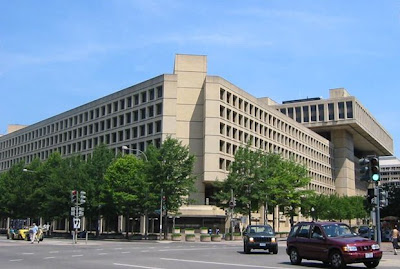
Gordon shook his head. She couldn’t have been a day over thirty. When he started in the Bureau, she would have been in junior high school. Is this room secure? No, we’re in the middle of FBI headquarters, Gordon thought. We have people drop in and bug rooms all the time. Hell, I invited the press.
“It is,” he said. “Please sit.”
“Mr. Swan, this is a fairly unique situation,” Theresa McNaney began, taking her seat.
“Everything we discuss here is completely confidential. Only agents you assign to this case should be informed of anything we’ve discussed, and then only on a need to know. We’ll also want the agents you assign to get DOD clearance when they begin.”
“Of course.” I’m missing dinner with my family to get treated like a two-year old by some intern who just happened to give the right person a blow job, Gordon thought. That’s just great.
He glanced over at Harold Voss, who looked a little uncomfortable that Ms. McNaney was informing a Deputy Director of the FBI of the obvious. He decided then that, irrespective of what he was told, he’d spend most of his time conferring with Voss.
“This is our situation,” she continued, pulling a file jacket out of her attaché case. She expertly pulled out one picture and flipped it down in front of Gordon.
She must’ve been practicing that all day, he thought.
“This is Dr. Donald Hermann Bernhard. Up until three weeks ago, he was working on a highly classified project at Oak Ridge National Laboratory. An internal investigation was begun approximately three months ago, regarding irregularities with the reporting process and due to a general lack of progress in regards to the project—”
“So what was this project?” Gordon interrupted.
Theresa McNaney looked visibly perturbed at being interrupted. “Research regarding an artifact. Now, once the investigation began–”
“What kind of artifact are we talking about?” Gordon asked.
The woman frowned. She obviously did not like how this was going. Where do they get these people? he wondered. He tried to resist, but he couldn’t help himself. “Is it bigger than a breadbox?”
The frown deepened. “It was an artifact of unknown origins. No, it was not bigger than a breadbox. Deputy Director Swan, may I continue?”
Gordon looked down at his legal pad, writing studiously, and pushed his glasses up the bridge of his nose. “Ms. NcNaney, in order that I might prepare to conduct an investigation, I will ask questions when and where I feel appropriate. If you want to give a speech, perhaps you should join Toastmasters.” As he spoke, he continued writing, not looking up. He was writing, artifact of unknown origins, my ass. Someone’s pulling my leg.
“Deputy Director Swan, I was assured you would be cooperative.” She seemed to actively be trying to inject an edge of menace to her voice.
Gordon looked up at her. “Ma’am, I can’t help you if you won’t let me ask questions. If you just want to make a speech, you obviously already have all the answers. If you have all the answers, what in the hell do you need the FBI for?”
“Deputy Direct Swan,” Harold Voss interjected, “we will both be happy to answer any of your questions, whenever you want to ask them.” He looked at Theresa, who conspicuously avoided his eyes. “Obviously, time is of the essence for everybody, so . . .”
“So,” Gordon said. “Artifact of unknown origins. What is that? Are you saying we’re talking about some sort of alien artifact? Somebody steal a flying saucer?”
Theresa McNaney opened her mouth to say something, and Harold Voss quickly said, “There is no official classification of the object. That’s why we were doing the research. It is possible that the object was of extra-terrestrial origin—at least that was speculation in some quarters—for a variety of reasons, all of which are in the file. Technically, the determination of origins is unknown, but wherever it originated, it is like nothing else on earth that we know of.”
“Nothing else on earth, eh?” Gordon asked, one eyebrow cocked skeptically. “As a rule, the FBI tracks down real, flesh and blood criminals, not little green men. The DOD is serious about this?”
“Very,” Voss said quickly, again speaking ahead of Theresa. “The NSA as well. And there is no positive conclusion that the artifact was extra-terrestrial in origin. What is clear is that it represents technology way beyond our own. We’ve—I’ve seen examples of it, with my own eyes. Now—”
“Now the artifact is missing and Dr.—what was his name?” Gordon asked.
“Donald Bernhard,” Theresa and Harold both said simultaneously.
“And Dr. Donald Bernhard took it. Security lax at Oak Ridge?”

“No.” Theresa McNaney again. She was apparently determined not to let the discussion get away from her. “And Dr. Bernhard’s record was impeccable. He worked at Los Alamos for almost twenty years, with distinction. He was instrumental in almost every weight-to-yield increase in our nuclear warhead technology in the late sixties and early seventies.”
Harold Voss, to Theresa McNaney’s clear displeasure, thumbed through her file jacket and pulled out a one-sheet dossier and pushed it over to Gordon, who picked it up and began reading.
“It is now our belief he had been in possession of the artifact for some time, and had substituted a similar object at the ORNL, possibly synthesized with technology acquired from the original artifact. It is our belief he had been concealing his progress with the artifact, and had gotten much closer to understanding how to decipher it than he had indicated in his reports, and had possibly learned to make use of the artifact to develop unique technologies, some of which he may have applied to get around the security at Oak Ridge—”
Gordon looked up from the dossier. Artifact. Unique technologies. What a load of bullshit. “Says here he was teaching at UC Berkley before he got the assignment at Oak Ridge. That didn’t set off red flags?”
Theresa flushed, apparently with anger.
Jeeze, is there anything I could say that wouldn’t set this bitch off? Gordon wondered.
Oh, the people you meet doing government work.
“He’s not a communist spy, if that’s what you mean, Swan. He was practically kicked out of Berkley for some of his anti-Communist leanings. He wrote a piece defending the arms race. He made a speech at Berkley about ‘the nuclear deterrent’ and was booed off stage. He published a piece just a month ago praising SDI. He’s on President Reagan’s short list to receive the Presidential Freedom Award. He had the highest level of security clearance available to a civilian for nearly twenty years. This is not a communist sympathizer or reactionary.”
McNaney’s nostrils flared. Swan glanced back down at the dossier.
“Perhaps there was outside pressure. Something involving a friend or a family member? Somebody in the old country? This says he was born in Austria, he went to school in England, Austria and France before getting his masters at MIT. He’s been around. Outside pressure?”
“There was no outside pressure—“ Theresa started.
“—that we know of,” Voss finished for her, although Gordon seriously doubted that was how Theresa was planning on finishing her sentence. “It is certainly possible. However, we’ve tapped the channels available to us and we’re out of options. If there was outside pressure on him, we do not know where it came from or of what nature it might have been. We suspect there was something in his investigation of the artifact that led to his decision to mislead his superiors and steal the artifact itself.”
Gordon tapped his pen on his yellow legal pad. He scratched his nose. “Is Dr. Bernhard dead, then?”
McNaney looked over at Voss, apparently meaning to exchange a look, but Voss just looked straight at Gordon. “Yes. We managed to track him to Los Angeles. We had released his picture to some of the hotels and restaurants in the area—”
“Why were you looking in L.A.?”
“Given his recent residence in California, it was high on our list of likely destinations, along with New Mexico—and Dr. Tsukishiro Yukito at Oak Ridge confirmed Los Angeles as a likely destination, based on previous discussion—”
“Dr. Tsuki-who-so?” Gordon asked.
Theresa McNaney tapped the table loudly with one finger. “It’s all in the report.”
Gordon frowned, then looked up at Voss. “Go on.”
“We located him in L.A., and an operative tailed him to the Four Corners Mall. When the state police closed in on him, he dropped dead.”
Gordon arched his eyebrows. “Dropped dead?”
“Dropped dead. Fell over, into his soup.”
“Soup?”
“He was eating lunch at the food court. The police closed in, cleared out the area, and took him out in a body bag.”
“What happened? Heart attack? Suicide? Poison soup?”
Voss smiled. “No, no poison soup. No heart attack, either. It may have been suicide.”
“May have been?”
McNaney thumbed through the file jacket and pulled out another photograph. “This is from the mall security camera. See that item he’s holding up?” Gordon did; in the blurry picture, it just looked like a blob. “We believe this may have been his method of suicide. Or, possibly, that he unintentionally killed himself. In either case, we believe the object was one synthesized from technology he derived for the artifact.”
“Huh.” Against his own better judgment, Gordon was beginning to consider the possibility that there might be a legitimate case here. Not in that there was legitimately some sort of alien artifact, or that half the stuff these two were telling him had more than a passing relationship to the truth. But, the guy was working on the project. He did disappear when they started investigating him. He did end up dead, half-way across in the country, at a mall in L.A. There was something there, even if Voss and McNaney weren’t giving him the real story.
“Did you locate the object?” Gordon asked.
“We believe we did,” McNaney replied. “It was a plastic box with a fairly crude system of wires and batteries, what we believe to be a phone speaker and a fairly large voltage capacitor.” She thumbed through the file jacket and then pulled out another picture. As she said, it was a plastic box, what looked like the speaker element from a telephone, some batteries and a capacitor. There was also a crudely wired toggle switch. “We believe there were other elements, utilizing technologies developed from the artifact, that are missing from the mechanism retrieved from the scene.”
Gordon shook his head. The sense that his leg was getting pulled on, and hard, returned. He tossed his legal pad and pen on the table. “So where the hell did this artifact come from?”
Voss leaned forward. Now that he was answering questions, he seemed excited. Did he actually believe this garbage? “It was recovered from Christmas Island off the coast of Australia in 1962 by the discovery team that was preparing for American nuclear testing. We believe that it may have been uncovered or in some manner revealed by the Mosaic G1 or G2 nuclear ground tests conducted by the British on
Christmas Island in 1956. It went through review in late 1963 with a number of other items, mostly nuclear glass and rocks and other objects, marked as unclassifiable and put in containment storage in New Mexico.”
“Unclassifiable, huh? What the hell does this thing look like, anyway?”
McNaney pulled another photograph, this one full color, out of the file jacket. “Pyramidal in shape. Pretty beaten up. A scuffed and weathered appearance, but otherwise not terribly remarkable.”
“So why was it unclassifiable?”
“It was noted at the time that unlike everything else retrieved from Christmas island—and I mean everything else; even shell fish 100 yards off the beach made the Geiger counters start clicking—it was not radioactive. At all. It also did not respond to chemical identification.”
“So they didn’t know what it was made of.”
“Correct.”
“And they packed it up in a box and put it in a government warehouse.” He shook his head. That would be about par for the course. Gordon had laughed until there were tears in his eyes at the end of
Raiders of the Lost Ark, when it had ended with the Ark of the Covenant, the holy repository for the stone tablets Moses brought down from
Mount Sinai, being wheeled into the depths of some giant government warehouse, to be lost among all the other boxes. His wife—and some of the other patrons of the theater—had looked at him like he was crazy, but it was so true. Certainly, that was the most credible part of Voss and McNaney’s story so far.
“Containment facility,” McNaney corrected.
“And there it would have stayed,” said Voss, “had there not been an investigation into the
Christmas Island nuclear tests. At issue was mostly the exposure of soldiers and even some civilians to the blasts, as well as the effect of fallout and lingering radioactivity on much of coastal Australia and the indigenous population. Congress appointed an oversight committee, and everything was dug up. All the paper work, all the records, all the test data, and all the materials and samples taken at Christmas Island.”
“Uh huh.” Gordon picked his pad and started writing again. “Go on.”
Voss continued. “The military investigators going through the materials had pretty broad authority, and when none of the crated material showed any signs of radioactivity—”
Gordon blinked. “None of it?”
“None of it. Going back through all the Christmas Island data, it turns out there was something that originally flagged our interest in the artifact, and it’s not clear why there was no follow up.”
McNaney leaned forward before Gordon could ask the obligatory,
and what was that? 
“The artifact was in the center, give or a take a yard, of an area of zero radioactivity. It’s why they examined the area closely enough to find it in the first place. There was a roughly 22.5 yard circle around the location where the artifact was discovered where there was no radioactivity. On an island that has some radioactivity on every square inch of it. In the middle of ground zero—not 40 yards away from where the tower for the second Mosaic test stood.”
“And, when we got it, we packed it in a crate and put it in a warehouse—I mean, containment facility.”
“It doesn’t seem the report was taken seriously at the time, or that there was any follow up,” Voss said. “But, when the military researchers noted the same phenomenon in 1977, it was taken seriously. Jim Turney, the lead investigator, believed the lack of radiation in the samples represented tampering or substitution. So, he ordered a full regimen on everything—carbon dating, x-rays, materials testing. He even secured access to an electron microscope to go over all the materials, nanometer by nanometer.”
“And he found little green men.”
McNaney flushed red again and leaned forward, her eyes wide. “As we have already told you, there has been no determination in regards to the origins of the artifact—”
Voss interrupted. “What he found was that most of the materials were about what you’d expect, other than the lack of radiation, except for one. The artifact was covered with symbols and diagrams—billions of them. Only visible under electron microscope.”
McNaney, glaring back and forth between the two men pulled a set of photographs from the file folder and slapped them down in front of Gordon.
“It is not a known alphabet or ideographic system or code,” Voss continued. “Many of the diagrams were recognizable as star charts, planetary maps, cartography, what could potentially be charts of the elements, diagrams of molecules, atoms, electrons. What appeared to be possible explanations of mathematical systems, one with a base of eight and one with a base of twenty-four. While some of the diagrams seemed recognizable and offered some clue as to some of the meaning of the symbology, we ended up with over twenty of our top cryptologists and linguists at the NSA trying to crack the code, and we were making no progress—”
“And this Dr. Bernhard,” Gordon said, looking back down to the dossier, “you think he ‘cracked the code’? I don’t see anything about cryptology here. Speaks three languages, right? But he’s not a linguist.”
“We have been reviewing the reports and records from the project since Dr. Bernhard took position as research head,” McNaney said. “We cannot find any indication as to how or to what degree he was able to decipher the artifact and possibly synthesize technology based on the data from the artifact.”
Gordon looked back down to the Dossier. “His wife died in a car accident in 1974. They were married . . . twenty-seven years. He resigned his position at Los Alamos the next year.”
Voss and McNaney looked at Gordon expectantly as he looked from the dossier to his legal pad. Finally, he looked up at them. “Did it ever occur to you that Bernhard thought you were a bunch of idiots and decided he would take you for a ride? That he was old and tired of life and thought you guys were a bunch of dumb asses looking for little green men in some kind of fake alien artifact and thought he might go out with a bang? See how far you guys would take this bullshit? See just how much of the government’s money he could waste?”
McNaney was turning red again, but Voss just looked steadily at Gordon. “There is no human technology that we know of at this point in time that would be capable of producing the artifact. We can see the symbols and diagrams, but we are not capable of producing them. Not that small. It’s at least twenty years ahead of our best etching technology. Not to mention that we’ve only been able to analyze twenty percent of the data after six years of active research. How much longer would it take to create that amount of randomized data and unique ideography and diagrams?”
“This isn’t some sort of prank,” McNaney interjected, glaring at Gordon.
“And I’ve spent a lot of time at Oak Ridge,” Voss said. “That’s why I’m here. The artifact is not just data. It is an active example of a form of technology unknown to us. I have seen it in operation.”
“Operation?” Gordon asked. “What kind of operation?”
“The activation of what appeared to be a defense mechanism, which injured three people. The projection of what appeared to be holographic images. The active absorption of radiation—heat and light radiation as well as radioactivity. The generation of strong magnetic fields. And more. It’s in my report, which is included in the file jacket.”
Gordon sighed. “And you’ve got Bernhard, but you can’t find the artifact.”
Voss nodded. “We’ve been conducting our own investigation, but haven’t turned up anything. The incident at the mall in L.A. attracted some attention, and we have limited authority for domestic investigation. It would be difficult for us to make much further progress without the assistance of the FBI.”
Gordon just shook his head. He was going to be up all night because some kooks at the DOD really thought they had some sort of extra-terrestrial codebook. Even if they managed to find the artifact—which, for all anybody knew, Bernhard could have just tossed off a bridge or thrown in a dumpster somewhere—what was likely to come of it? Except that, after funding got cut for the current research, it would be stuck back in a crate in a warehouse somewhere. And the world would be no closer to meeting E.T. than it had been before.
But there was no choice about the investigation. The Bureau would be doing it, and Swan would be in charge. He wouldn’t be able to stick it on somebody else. William Webster had called him personally. Which meant other people, important people, behind the scenes took this very seriously.
It was going to be a late night.
“Okay,” Swan started, putting pencil to pad. “I’ve got some questions.”



 Posts
Posts

